
For Mike Ellingson, accurate spatial data helps Pulice project teams plan work, reduce risk and build complex infrastructure with greater precision.
As newly promoted Survey Director for Pulice – a FlatironDragados company, Mike Ellingson leads the survey teams, digital tools and field data that support projects from planning through construction.
"Every road, bridge, utility, building, or development project begins with accurate survey information. Surveying provides the foundation for everything that follows. Surveyors help turn design into physical reality "
For Mike, the appeal is simple.
“What fascinates me most is that surveying turns the physical world into reliable data,” Mike says. “Every road, bridge, utility, building or development project begins with accurate survey information.”
Technology, problem-solving and fieldwork first drew Mike to surveying. He saw how precise measurements support every phase of a project and found a profession at the intersection of engineering, construction and technology.
What does a survey director do?

Mike oversees survey operations across Pulice’s work in Arizona and Texas, supporting project teams with the data, models and field information they need to make sound decisions.
His priorities center on four areas:
Safety: Mike wants survey teams to collect the information projects need without exposing people to unnecessary risk. That means planning fieldwork carefully, adapting to changing conditions and using technology when it can reduce exposure.
Quality: Project teams and clients rely on survey data to guide construction. Mike focuses on delivering accurate, dependable information teams can trust from planning through project completion.
Technology and innovation: Mike evaluates tools that can improve efficiency, accuracy and project outcomes. He sees technology as a way to solve problems, reduce rework and give teams better information.
People development: Mike builds strong teams, mentors future leaders and creates opportunities for employees to grow. He views professional development as essential to maintaining technical expertise and preparing Pulice for future work.
“Ultimately, my job is to ensure we provide value to clients while developing a culture where our employees can succeed,” Mike says.
How is technology changing surveying?
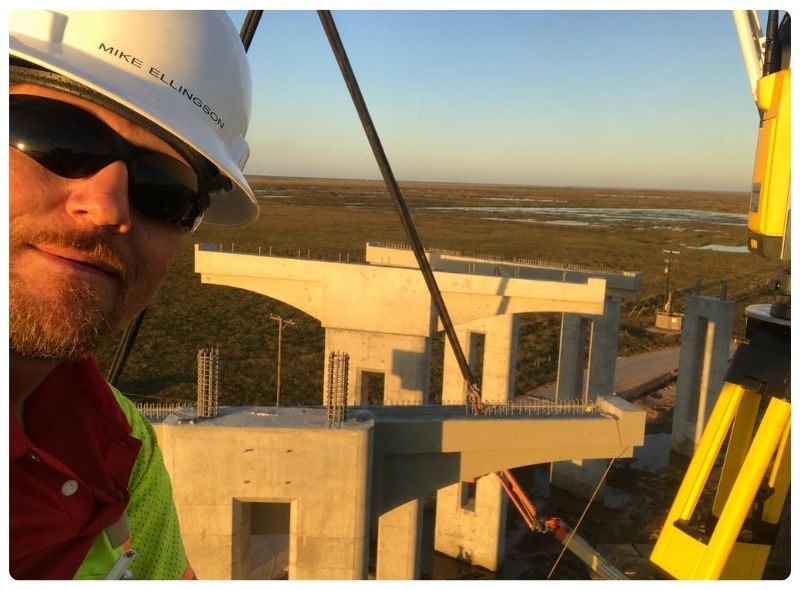
Surveying has transformed over the past two decades.
Global navigation satellite systems, or GNSS, allow crews to collect precise positioning data more efficiently. Robotic total stations enable one surveyor to complete work that once required multiple people. Machine control systems connect digital survey models directly to construction equipment, helping operators build with greater precision and reduce rework.
Drones allow teams to map sites, calculate quantities, monitor progress and document conditions quickly and safely. Lidar and laser scanning capture millions of data points, creating detailed digital representations of sites, structures and terrain.
These tools have expanded the role of survey professionals beyond traditional field measurements.
“We’re no longer just measuring points,” Mike says. “We’re delivering comprehensive digital datasets and models that support the entire lifecycle of a project from planning and design through construction and asset management.”
That shift gives project teams a clearer view of existing conditions, construction progress and potential issues. It also strengthens coordination among surveyors, engineers, contractors and clients.
What makes a successful surveyor?
Mike tells his team to protect accuracy, stay curious and understand the reason behind the work.
“Never compromise accuracy for speed,” he says. “Stay curious and keep learning because technology will continue to evolve.”
He also emphasizes communication, consistency and integrity. Surveyors make decisions that can affect major construction activities, so technical skill alone is not enough.
“Professionalism, integrity and a willingness to learn are what truly separate great surveyors from average ones,” Mike says.
Mentorship played a major role in Mike’s career. Leaders challenged him, shared their knowledge and trusted him with greater responsibility. Their guidance helped him avoid mistakes, broaden his perspective and develop leadership skills that textbooks cannot teach.
Now, he sees mentorship as part of his responsibility.
“One of the most rewarding parts of my role is helping younger professionals grow and preparing the next generation of leaders in our industry,” Mike says.
How did Army service shape Mike’s leadership?
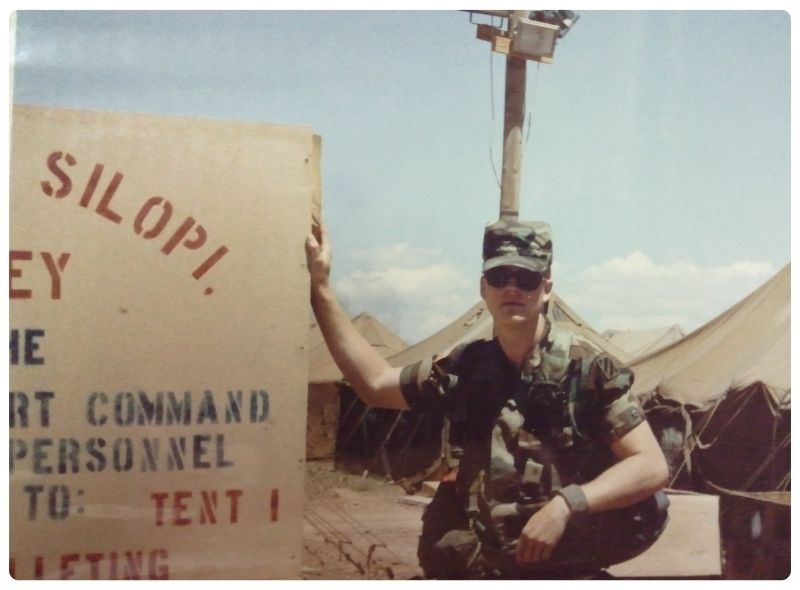
Mike served in the U.S. Army for six years, an experience that continues to shape how he leads.
The Army taught him discipline, accountability, preparation and teamwork. It also showed him that strong organizations depend on trust, clear communication and people who understand their responsibilities.
Those same qualities define successful geomatics professionals.
Surveyors need attention to detail, technical proficiency, adaptability, critical thinking and integrity. They must make sound decisions, communicate clearly and stay focused when conditions change.
“Leading survey and geomatics teams requires the ability to make decisions, support your people, adapt to changing conditions and remain focused on mission success,” Mike says.
Technology will continue to change how survey teams work. For Mike, the foundation will remain the same: accurate information, trusted people and disciplined execution.
When you join our team you’ll have the opportunity to learn from experienced leaders such as Mike. Explore career opportunities at Pulice on our careers page.