
Pulice and McNeil Brothers are rebuilding Taxiway G at night to manage Arizona heat and improve runway safety.
It’s common knowledge that summers in the Phoenix area can be brutal. So Senior Project Manager Jeff Gergal and his team at Mesa Gateway Airport have the paving equipment running long before the sun comes up.
“Why are we out here this early? Because it’s 78 degrees,” Jeff says. “When it’s 115 degrees during the day, it’s too hot to be placing concrete and trying to finish it.”
With conditions like that, Pulice – a FlatironDragados company and its subsidiary McNeil Brothers are working from midnight until roughly sunrise to place concrete for the Taxiway G Realignment and Reconstruction project.
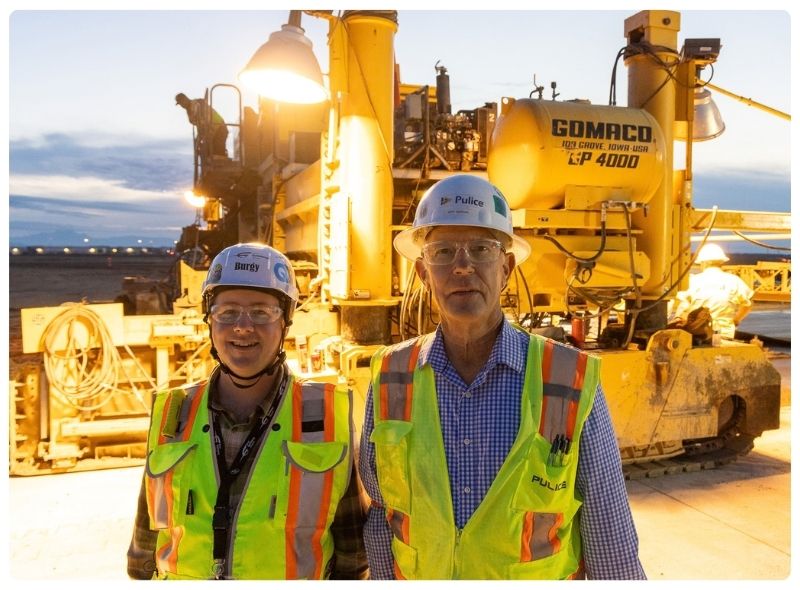
Cooler temperatures give the team more control over placement and finishing. They also help limit the effects of heat of hydration and reduce the risk of plastic shrinkage cracking.
How is the paving team able to place concrete so quickly?
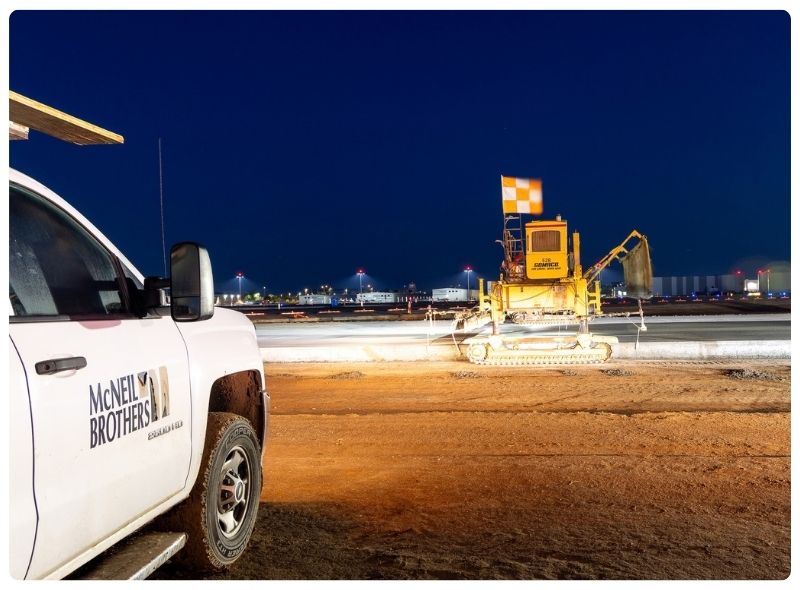
McNeil Brothers operates a portable batch plant next to the project, allowing the team to mix concrete on site and move 10-cubic-yard loads directly to the paving operation. The material can reach the Gomaco 4000 slipform paver within about 12 to 15 minutes of batching.
“The truck drives out the haul road, and it’s being placed probably 12 minutes, no more than 15 minutes after it was batched,” Jeff says.
That short trip helps keep the material cooler and more workable while supporting the quality requirements for airfield pavement.
What is the scope of the Taxiway G Realignment and Reconstruction project?
Taxiway G is part of ongoing improvements at Mesa Gateway Airport designed to modernize airfield infrastructure and improve runway safety.
The project replaces a legacy diagonal taxiway configuration dating to the airport’s military history with a 90-degree connection to the runway. The change improves safety by giving pilots a more direct view of runway traffic before entering an active runway.
Pulice is managing the overall CMAR delivery, including earthwork, storm drainage, electrical work and other infrastructure. McNeil Brothers is performing the concrete paving.
The operation requires experienced craft workers to coordinate batching, hauling, slipform paving, hand finishing, jointing and dowel placement while meeting FAA specifications.
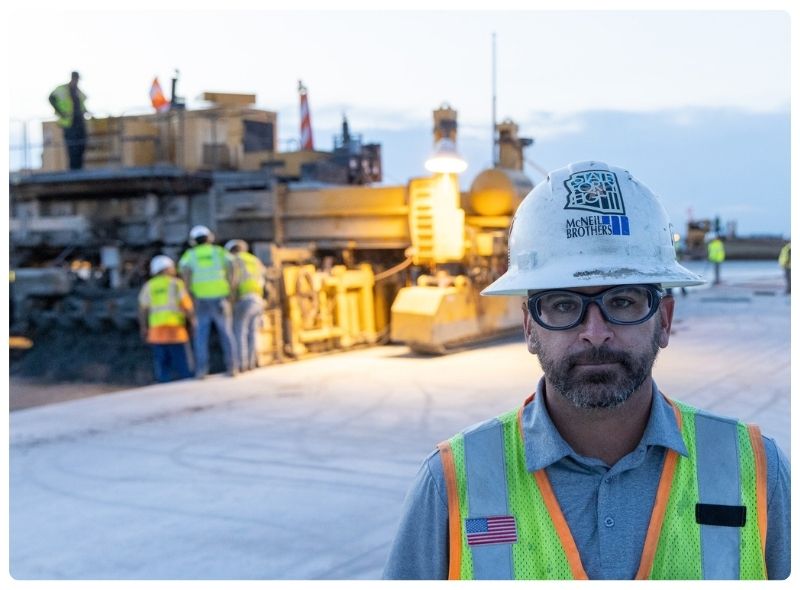
For McNeil Brothers Superintendent Daniel Martin, the priorities remain straightforward.
“I’m just making sure that all the quality is up to par, everybody’s working safely, and everything’s to spec,” Daniel says.
How does Taxiway G coordinate with the Runway 12R-30L Phase II project?
The project team is also carefully sequencing the work to reduce future disruption at Mesa Gateway Airport.
Pulice is rehabilitating nearby Runway 12R-30L. However, at the airport’s request, the team has adjusted the schedule to work on both projects simultaneously.
Completing the projects concurrently means the airport will not need to reopen the full runway and later shut it down again specifically for Taxiway G. Avoiding that additional runway shutdown reduces operational disruption and benefits the traveling public as Mesa Gateway Airport continues serving commercial, private and flight school aviation.
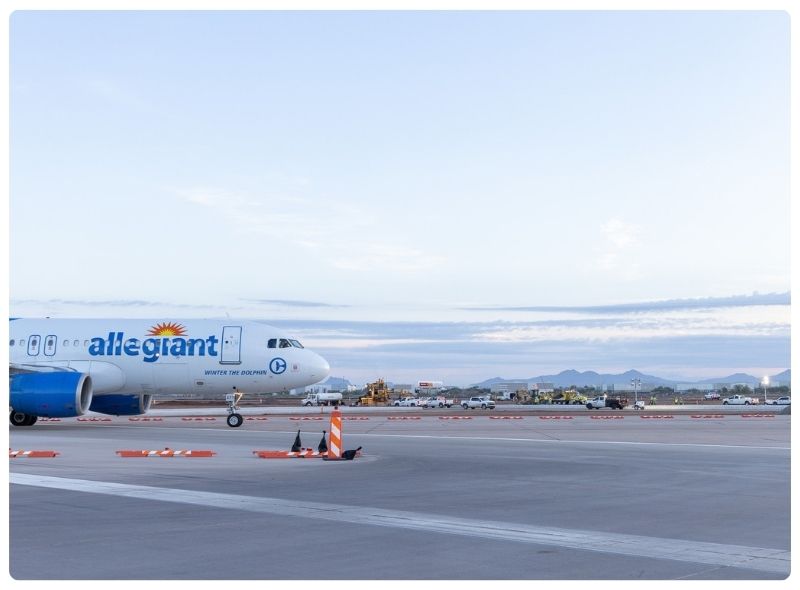
“By doing Taxiway G concurrently while the runway is closed, the airport never has to shut down this runway again once opened,” Jeff says. “The beauty of having our own batch plant right here on site is that concrete is placed within 12 to 15 minutes, giving us higher quality, easier finishing, and a 50-year useful life.”
We’re proud to spotlight the Mesa Gateway Airport team, where we have delivered multiple airside improvements since 2018.