
Before our crews could move dirt on the Loop 303 extension from Van Buren Street to MC 85, the project team had to account for some much smaller occupants: burrowing owls living within and near the future construction zone.
As part of pre-construction environmental work, Alta E&I, a Pulice subcontractor, surveyed the project area for the raptors and their burrows before ground-disturbing work began. Surveys conducted between May and July 2026 documented nearly two dozen burrowing owls across the project area. Because the development would directly impact owls in the project area, Alta implemented required environmental mitigation measures by working with a wildlife rehabilitator to relocate owls out of harm’s way.
“Conducting a pre-construction survey helps identify active burrows and allows project proponents to avoid impacts to nesting owls or implement appropriate conservation measures before ground-disturbing activities begin,” says Eric Arlotti of Alta E&I.
Why are burrowing owl surveys important before construction?
Burrowing owls are protected under the Migratory Bird Treaty Act, and their habitat has declined as open and agricultural land across Arizona has transitioned to residential, commercial and industrial uses. Arizona Game and Fish Department guidance recommends pre-construction surveys to identify owl activity and determine appropriate avoidance or conservation measures. The Arizona Department of Transportation committed to completing pre-construction burrowing owl surveys as part of the project’s environmental clearance.
When relocation became necessary, the project team coordinated with Wild at Heart, a Phoenix-area nonprofit raptor rescue and rehabilitation organization. Wild at Heart captured the affected owls and temporarily housed them before moving them to prepared relocation sites with artificial burrow systems. The owls acclimated to their new habitat within protective enclosures before release, a process designed to reduce stress and encourage them to establish themselves in suitable long-term habitat.
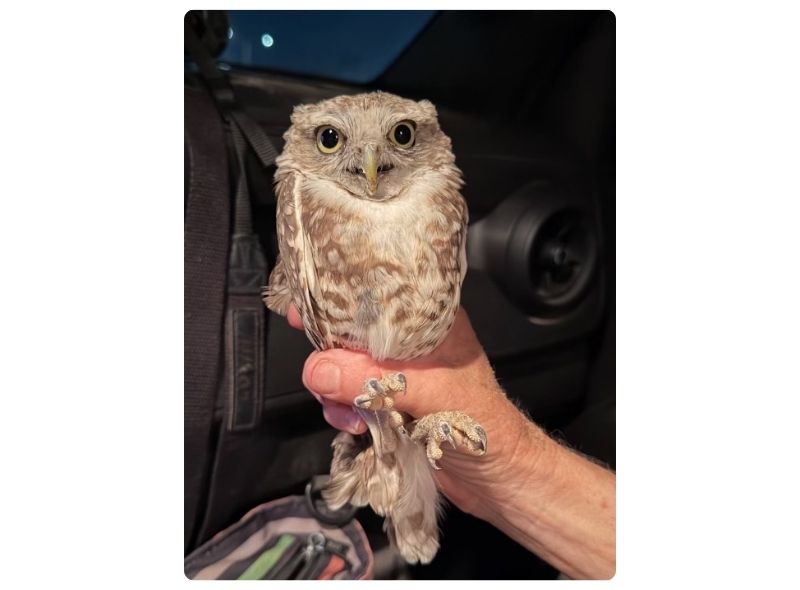
The operation required a high degree of sensitivity, as owls are very attached to their burrows. They know how to hunt and survive there, so they are typically very reluctant to leave.
The wildlife work took place ahead of a major Arizona Department of Transportation investment in West Valley mobility. Pulice is building the $322 million, four-mile Loop 303 extension from Van Buren Street south to MC 85, primarily along the Cotton Lane corridor. The project includes freeway lanes, interchanges, bridges, frontage roads, lighting, signage and sound walls.
For the project team, the relocation showed why environmental planning starts before construction: identify potential impacts early, bring in the right specialists and make room for both infrastructure and the wildlife that calls the corridor home.